

Manufacturers and contractors
3D‑printed concrete elements — to order or in your workshop
We print elements to your drawings or install a system in your workshop — with feed and extrusion tuned to your mix.
Adaptation
Two ways
Order elements or print in-house
Printing to order
We print elements to your drawings — from a single piece to a small series. No new formwork for every new shape.
A system in your workshop
Printer, material feed, extruder and DrukOS for your product range. We commission on site and train your team.
What we print
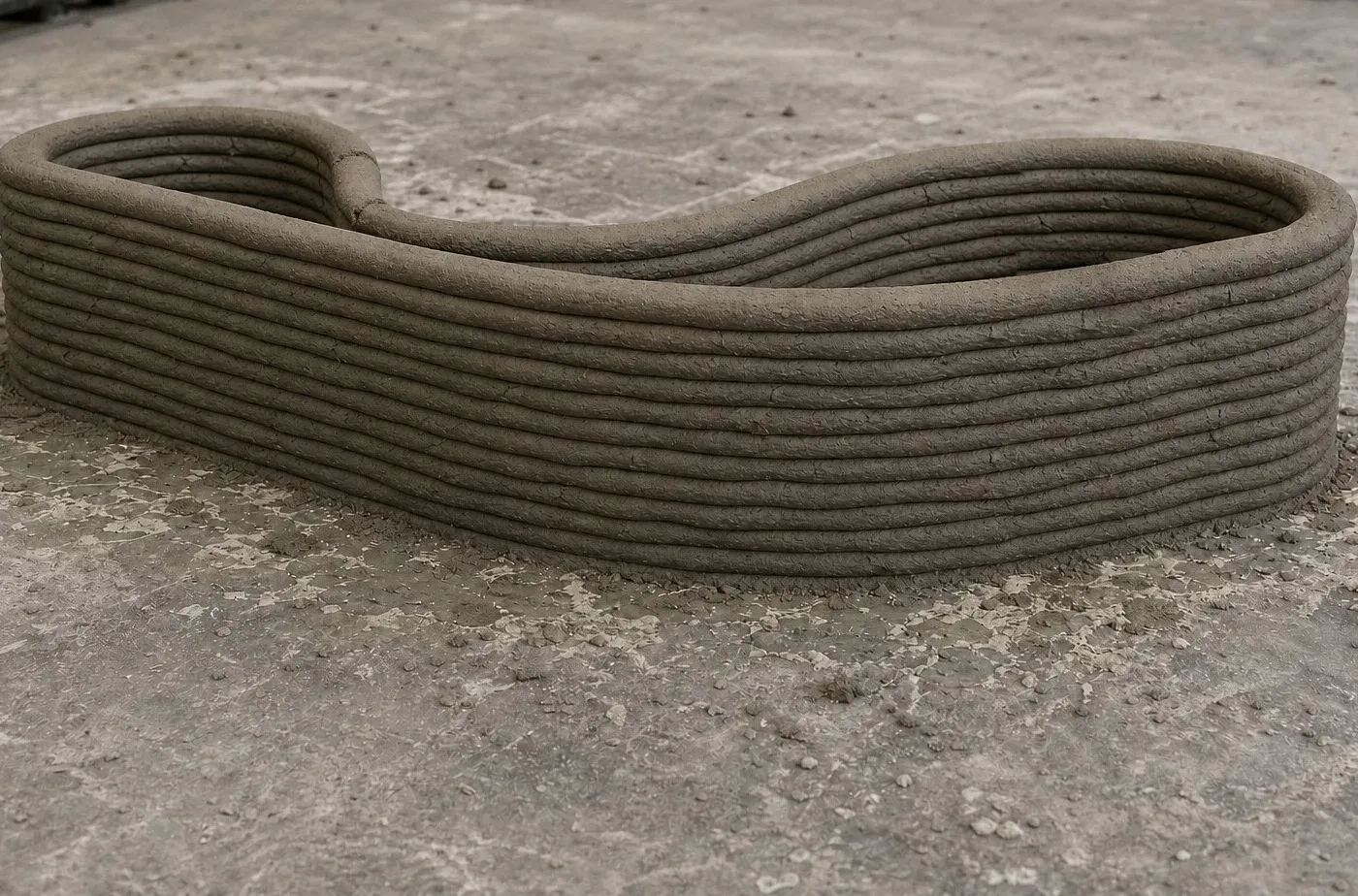
Elements that are costly to cast in formwork
We print to your drawings.
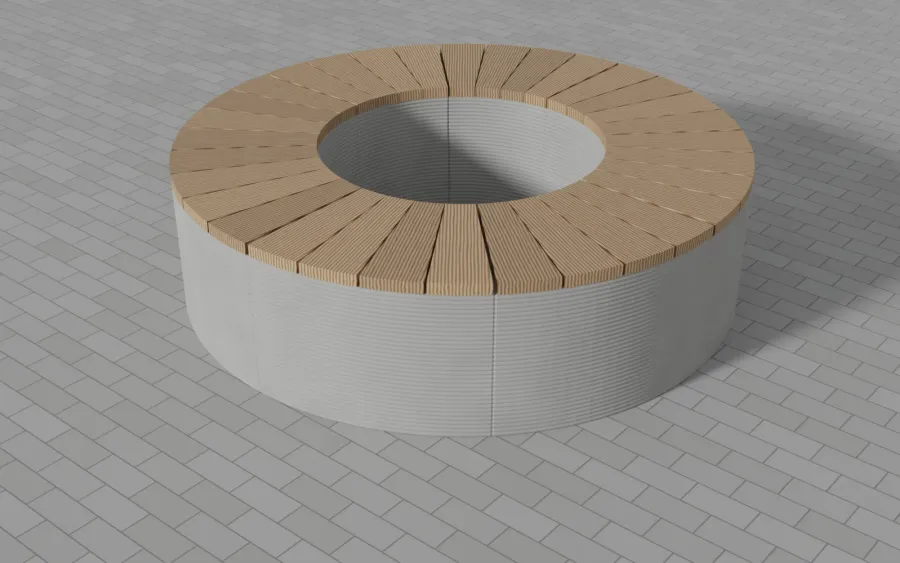
- Benches and street furnitureBenches, tables, planters, litter bins.
- Fences and enclosuresSections, decorative panels, retaining walls.
- Architectural formsColumns, facade elements, small architectural forms.
- Your elementA non-standard shape to your drawing.
Product catalog
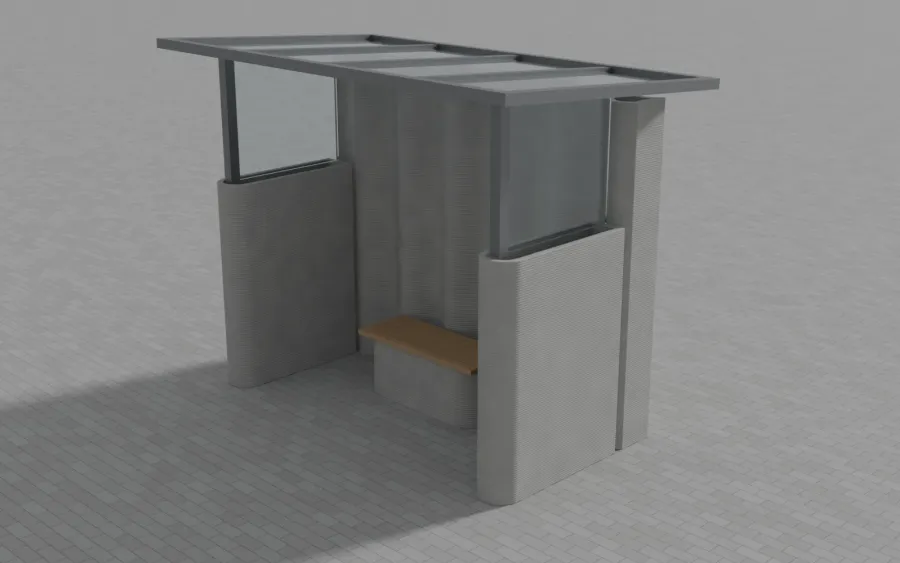
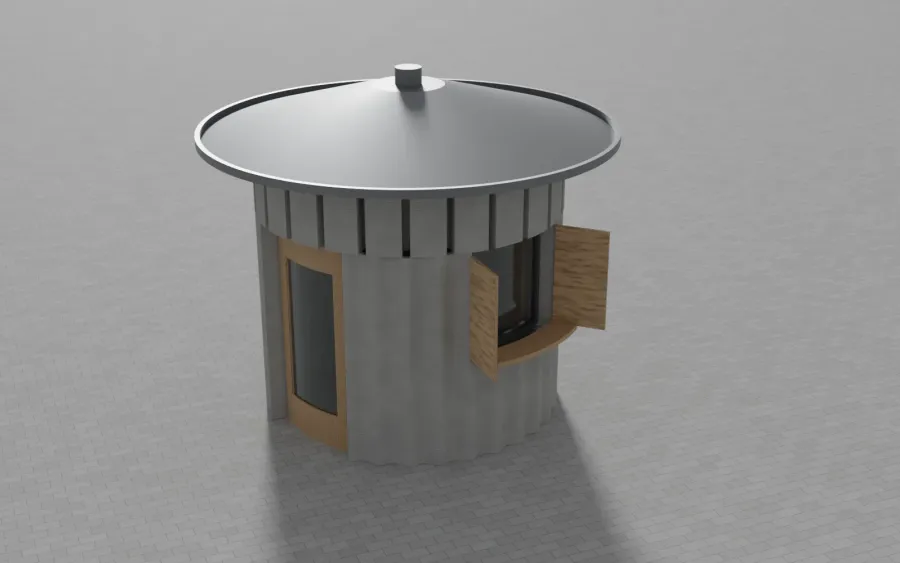
Catalog models: benches, bus stops, kiosks
Ten small architectural forms with drawings and elements. Printed to order, size adapted to the site.
For house builders
A wall with hemp insulation
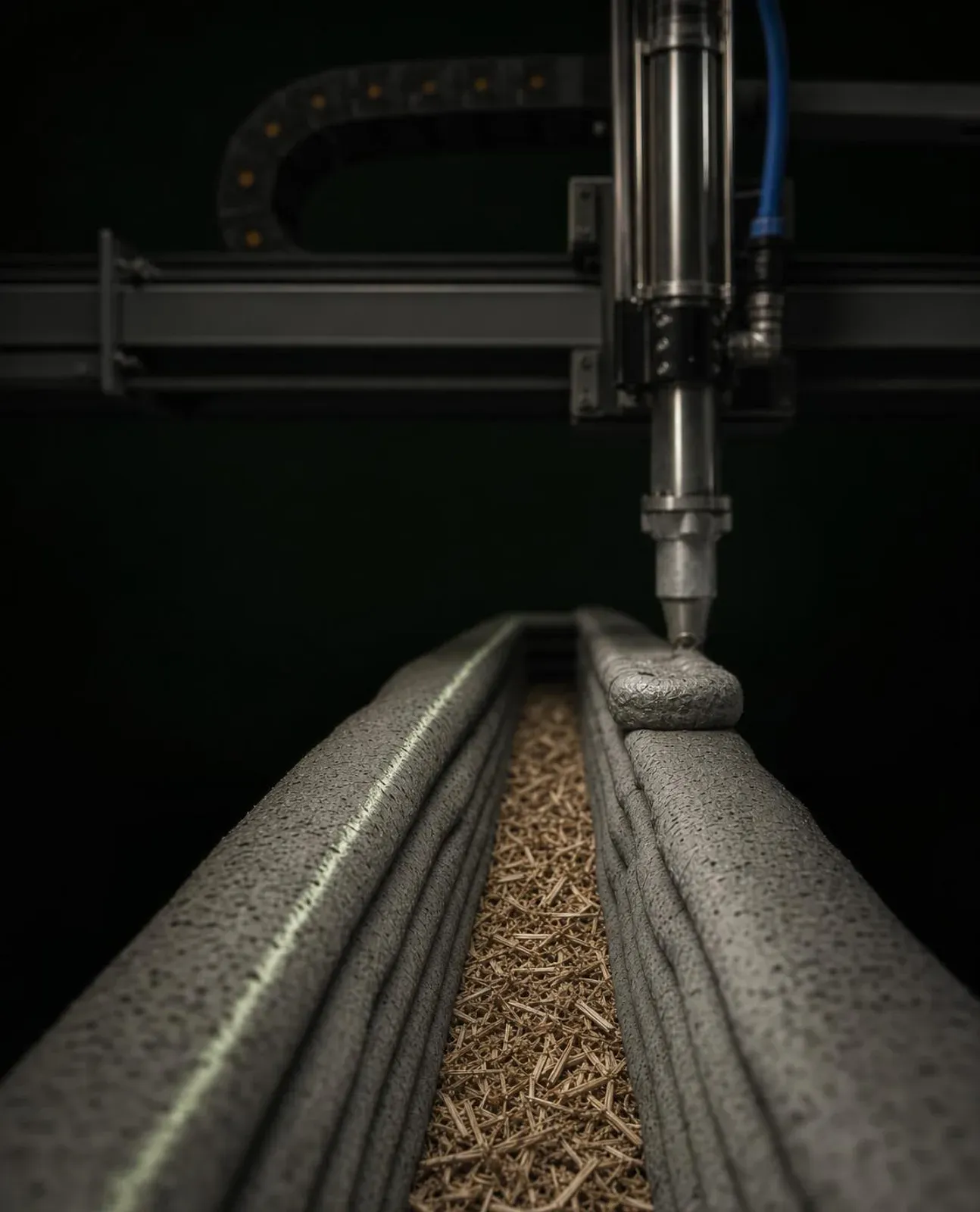
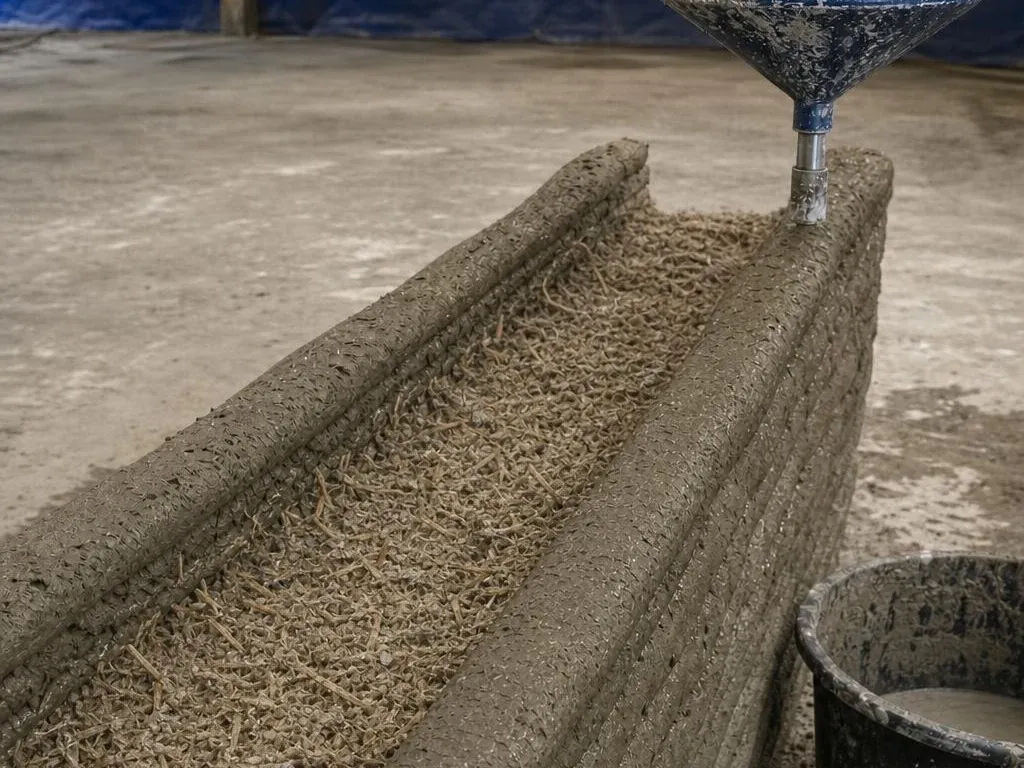
A Brama gantry printer prints the concrete shells of the wall on site, from one to ten depending on the configuration, and the cavities are filled with hemp insulation. We match the printer configuration to your project and work out whether printing makes sense before you start.
How we work
From drawing to element
1. Task
Element, dimensions, quantity, mix.
2. Estimate
We work out the element cost and lead time — or tell you printing will not pay off.
3. Elements or a system
We print the series ourselves or install a system in your workshop.
4. Commissioning and training
If the system is yours, we commission it on site and train your team.
Honestly
When printing makes sense, and when it does not
Makes sense
- Non-standard geometry that is costly to form.
- Small and medium series and frequent shape changes.
Does not
- A large series of identical elements where the formwork has paid off.
- Standard elements a precast plant already makes in series — buying them is cheaper.
- A system in your workshop with nobody to run printing every day.
Before printing or buying equipment, we work out the element cost. If printing will not pay off, we say so.